
August 5, 2026
Insights
Imagine living in a small town where the last bus leaves at 7 p.m.
The stop is still there. The timetable, too. But after that, mobility effectively ends.
For residents, the gap is obvious. For transport authorities, it raises a different challenge: how should public transport be planned and assessed when demand drops, spreads out, or shifts to off-peak hours? Keeping fixed routes running often means low occupancy, rising costs, and difficult trade-offs.
These situations highlight the limits of fixed-route planning alone. In many regions, flexible and demand-responsive services increasingly shape the actual mobility offer — and need to be considered when analyzing and evaluating public transport systems, especially where demand is too low or too scattered for traditional routes to work efficiently.
The following sections take a closer look at what these these services are and how they fit into public transport planning and analysis.
On-demand transport refers to flexible, demand-responsive services that are integrated into public transport networks. Unlike traditional taxis, these services are booked via apps or digital platforms, often usable with standard public transport tickets, and are designed to supplement buses and trains. In most cases, users pay a small comfort surcharge — but gain reliability in places and times where fixed routes struggle.
Germany has a long history of demand-responsive transport. These services typically operated only when booked by phone or web and included:
What held these services back wasn’t the concept itself, but coordination. Routes were planned manually, requests came in early, and adapting to changing demand was difficult.
Today, routing algorithms and real-time booking have helped the popularity of On-Demand Transport. Modern on-demand services dynamically bundle trips, optimize routes, and adjust supply to actual demand, offering higher flexibility by operating dynamically without fixed routes or timetables.
This transport form is particularly effective in areas with "ride-pooling" potential. Ride-pooling is the practice of efficiently bundling multiple passenger requests into a single, coherent route, which is a core component of modern routing algorithms.
Today's on-demand services are generally offered in two primary models:
On-demand transport addresses problems that planners know well. In many regions, travel demand is spread out, across different destinations and times of day, making fixed routes inefficient and costly to operate. Large vehicles often run nearly empty, especially at night, on weekends, or in rural areas — exactly when public transport services are usually reduced or disappear altogether.
On-demand services respond directly to this reality by adjusting vehicle size and frequency to actual demand, keeping the network usable even when demand is low. At the same time, they help bridge first- and last-mile gaps by connecting neighborhoods to main stations and mobility hubs, strengthening the public transport system as a whole.
Not every on-demand service is a success story. A key risk is cannibalization: when on-demand vehicles compete with well-functioning bus or rail lines, they can increase costs without improving accessibility.
That’s why integration is crucial.
Well-designed systems first assess whether a trip is already well served by fixed routes, prioritize conventional public transport where it works best, and deploy on-demand vehicles only where they add real value. Equally important is demand analysis. Without sufficient ride-pooling potential, on-demand services quickly become expensive.
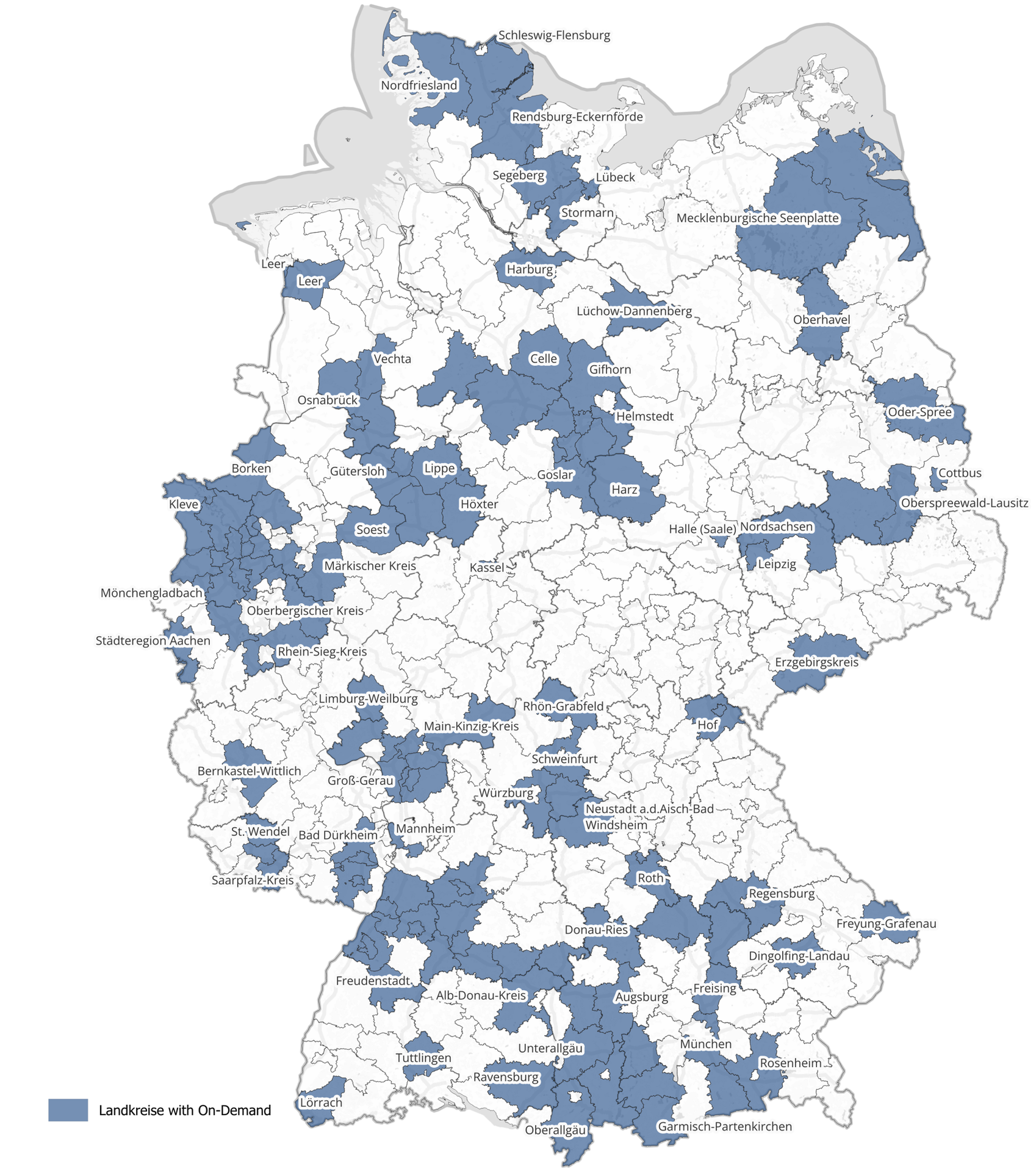
Today, on-demand services operate across many German regions, mostly organized by Verkehrsverbünde (transport associations). The map below shows counties where on-demand services are available. It is important to note that these services do not necessarily cover entire counties, and the landscape is highly dynamic: services are frequently introduced, adjusted, or discontinued. This snapshot reflects the situation in early 2025.
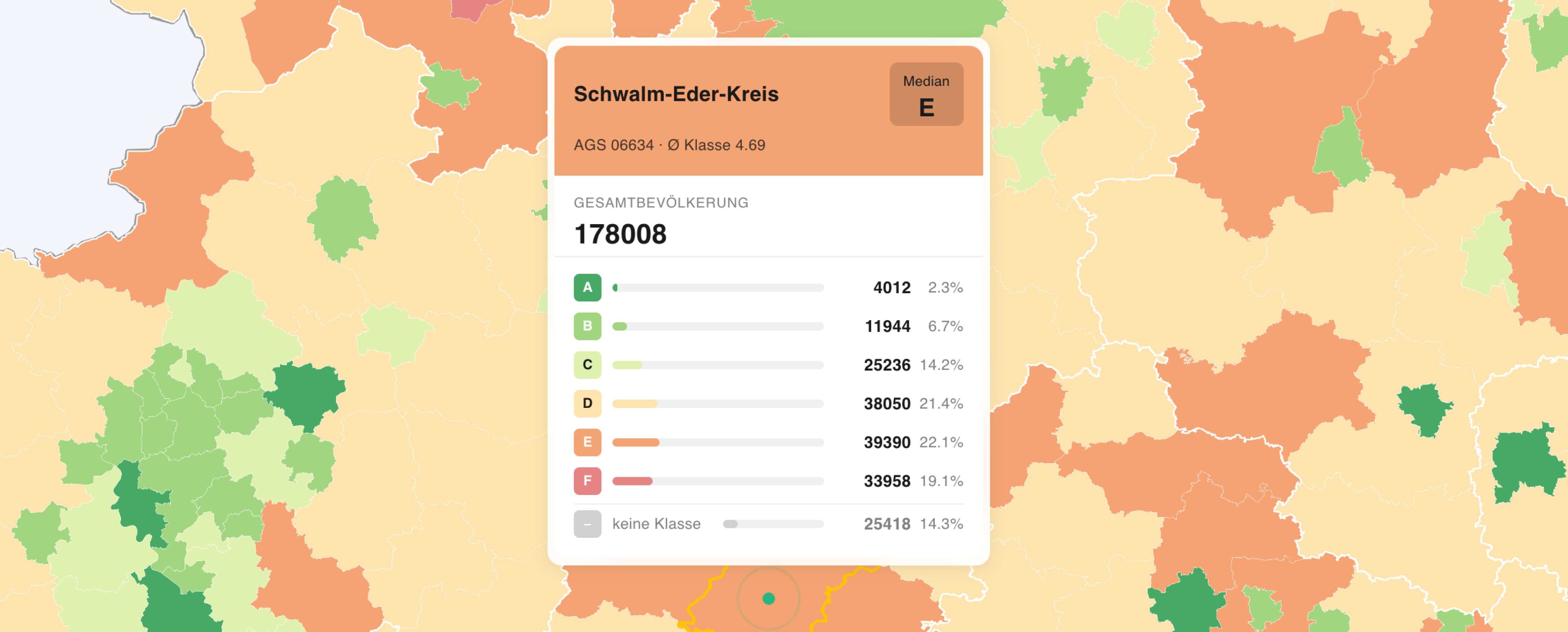
At Plan4Better, we treat on-demand transport as part of the public transport system — not an exception. Excluding it would mean misrepresenting the actual mobility offer people experience. That’s why we integrate station-based on-demand services into our ÖV-Güteklasse analysis. This allows us to assess accessibility more realistically, especially in areas where flexible services fill critical gaps.
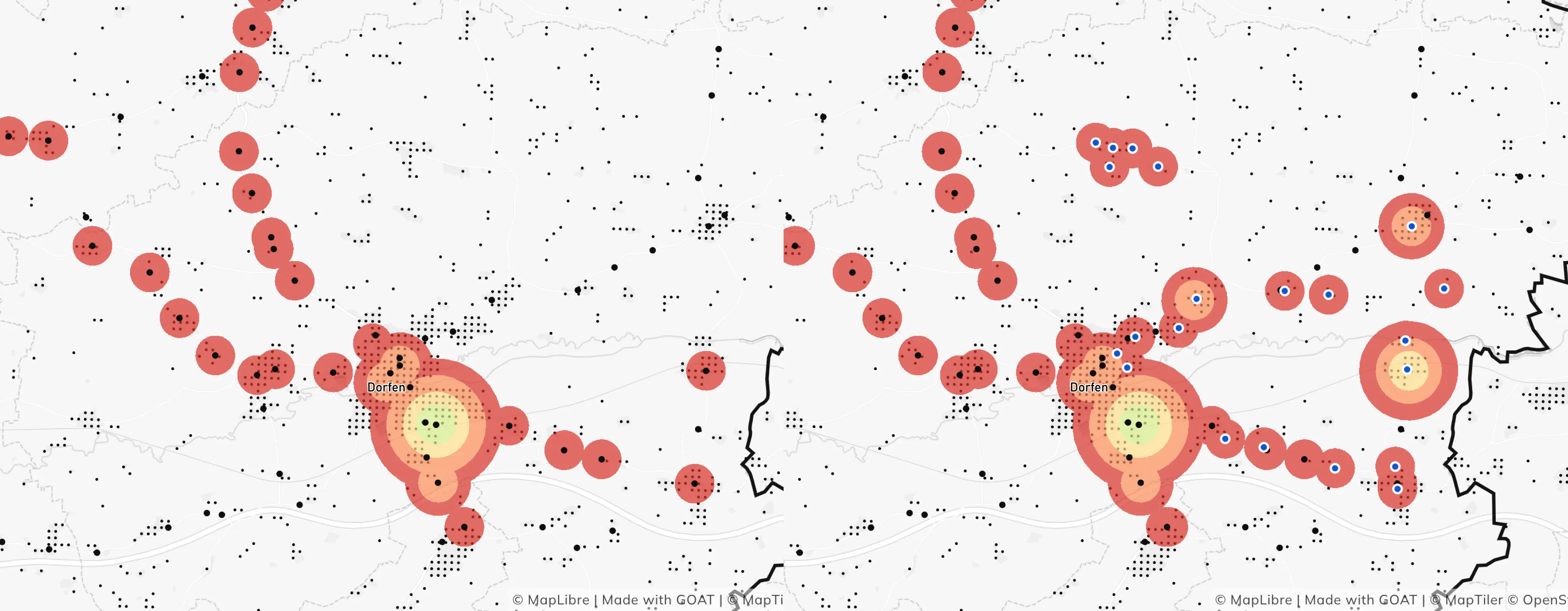
In Dorfen, for example, an analysis based only on fixed routes suggests limited accessibility. Once on-demand services are included, the picture changes — not everywhere, but precisely where flexible services extend the network. Beyond evaluation, our data-driven approach also helps identify where new on-demand services make sense — based on demand patterns, occupancy, and network structure.
On-demand transport isn’t a shiny mobility gadget. It’s a planning decision.
The difference lies in integration, data, and clear objectives — exactly where modern planning tools like GOAT can make the difference.
In practice, this means evaluating on-demand services not in isolation, but in relation to existing networks, demand patterns, and usage. Beyond assessing current services, our data-driven analysis helps identify where new on-demand services are most effective by combining public transport usage, occupancy, and mobility demand data.
Insights
GOAT
.png)
Development